
Civil Society Coalition for Congolese Sovereignty
After the fall of Goma and Bukavu, around 80 civil society organizations from IfE’s network in the Democratic Republic of the Congo (DRC) formed a coalition to press for the sovereignty and autonomy of the country.
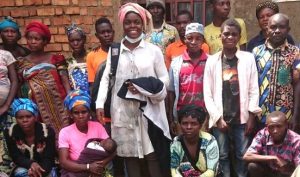
In April of 2025, after the fall of Goma and Bukavu, around 80 civil society organizations from IfE’s network in the Democratic Republic of the Congo (DRC) formed a coalition to press for the sovereignty and autonomy of the country. The informal coalition, called Mobilization for the Safeguarding of Congolese Sovereignty and Autonomy, keeps its members anonymous because of the life-and-death risks associated with speaking out in the conflict zones and areas under occupation. Read more about the situation here.
The Coalition’s 15-member Coordination Committee meets weekly to discuss the current front lines in the military conflict, the human rights abuses that transpire daily, the international reactions to the occupation and the pillaging of mineral resources, and the political maneuvers of the Congolese government and the de facto occupation government as they both look for ways to assert themselves. The Coordination Committee keeps in touch with Coalition members, taking input through polls and calling for advice and concerns. Together, we adopt positions and speak out nationally and internationally through issuing declarations, open letters, press releases and social media posts in the name of the Coalition. Deborah S. Rogers, IfE’s President, provides international outreach (in English) for the coalition. See a summary of MOSSAC’s statements, listed below.
In addition to issuing statements and advocating for the sovereignty and territorial integrity of the DRC, our Coalition also plays an active role in:
- documenting human rights abuses and war crimes;
- providing humanitarian assistance to marginalized communities such as the Indigenous Batwa (Pygmies) when they are forced to flee from conflict;
- helping to protect individuals whose lives are threatened by the occupation forces because of their work on behalf of human rights;
- monitoring the long-term implementation and impacts of the various accords; and
- continuing to advocate for justice through an international tribunal.
The Coalition, along with IfE, has issued the following statements since February of 2025:
Western Aid and Agreements Allow Rwandan Forces and M23 to Invade, Occupy and Pillage Minerals in DR Congo – 18 February 2025
This 17-page IfE report lays out the background of the conflict, and the role of the international community leading to the invasion and occupation of eastern DRC by the Rwandan-backed M23. Read the report here.
Open Letter – 18 April 2025
A coalition of Congolese civil society leaders is calling on the international community to cease all material and political support for Rwanda’s invasion and occupation of the eastern Democratic Republic of the Congo (DRC). In an Open Letter signed and circulated by Congolese non-profit leaders and public interest attorneys, they make the case that Rwanda is supporting the M23 and other armed militias in order to illicitly extract minerals from the DRC which are then sold as Rwandan products. This is made possible, they say, by the financial and diplomatic support of the European Union and various Western countries, companies and multilateral donors such as the World Bank. Read more here.
Declaration on Peace Process – 26 May 2025
A coalition of Congolese civil society leaders is expressing strong reservations about the peace accord and business deal currently being negotiated between the Democratic Republic of the Congo (DRC) and Rwanda, under the direction of the Trump administration in the United States. In a “Declaration of concerns”, the Coalition warns that the current negotiations pose an existential crisis for the DRC, in which its sovereignty over its borders, territories, resources, economy and military are being undercut by allowing Rwanda and the US to participate in the exploitation and decision-making. Read more here.
Urgent Appeal – 23 June 2025
A coalition of Congolese civil society leaders has issued an urgent appeal to preserve Congolese sovereignty and to reject the hasty and ill-conceived peace accord and business deal between the Democratic Republic of the Congo (DRC) and Rwanda, developed under the direction of the Trump administration in the United States. The peace accord and business deal is scheduled to be signed by the foreign ministers of DRC and Rwanda in Washington DC on 27 June 2025. In their “Urgent Appeal”, the Coalition concludes that: “this secret agreement, which has not been shared with the Congolese people, will end up diminishing the sovereignty of the DRC over its own lands, resources, governance, economy and military,” and anticipates that: “it will provide a framework to normalize the current illicit resource and power grabs underway by Rwanda, the M23, the AFC and their other allies…”. Read more here.
Strategic Note – 25 August 2025
A coalition of Congolese civil society leaders is calling on the Congolese government to exit the two Peace Accords and the Business Deal promoted by the US Trump Administration starting in April of 2025. The members of the Coalition compiled relevant field data and developed their analysis of the situation through two surveys and many discussions, concluding that:
- The peace agreements are being violated and not respected.
- Even if implemented, these agreements will bring neither peace, justice, nor sovereignty to the DRC.
- Other approaches are more likely to lead to peace, justice, and sovereignty.
Critique of the Washington Accords – 17 February 2026
A coalition of Congolese civil society leaders has issued a detailed critique of the Washington Accords signed by the DRC, Rwanda and the United States, and has proposed a series of steps to ameliorate the negative impacts of these Accords. In short, the Coalition:
- asserts that neither Rwanda and its allies nor the United States can be relied on to ensure a permanent ceasefire and the withdrawal of armed forces and the parallel government from the occupied zone in eastern DRC;
- calls on the Congolese government to remain firm in its refusal to implement the resource exploitation provisions of the agreements until the troops are gone, and the occupied zones and mine sites have been returned to their rightful owners under a democratically elected government;
- notes that there was no transparency, and no local government or public involvement in the development of these agreement;
- calls for a nation-wide dialogue with broad participation to address a list of concerns including justice, return of lands and resources, compensation, building the loyalty of the Congolese army, and other essential steps to ensure peace, security and sovereignty in the future;
- points out that the primary beneficiary of these agreements is the United States – not the DRC, because the agreements, especially the “Strategic Partnership Agreement”, give a large share of the decision-making about laws, policies, regulations and the distribution of minerals to committees controlled by US appointees;
- calls on the Congolese parliament to annul the government’s signature on the Strategic Partnership Agreement, given that this agreement constitutes a violation of the Congolese constitution and sovereignty;
- expresses its assessment that these agreements represent a step backwards from the UN Security Council’s Resolution 2773, which demands unconditional withdrawal of Rwandan troops and restoration of territorial integrity and sovereignty;
- calls on the United Nations and the international community to take all steps needed to implement UNSC Resolution 2773 immediately;
- observes that the agreements do not address issues of justice or the culpability of Rwanda in the war of aggression, invasion and occupation of eastern DRC, but instead reward Rwanda by presenting them a pathway to normalize and make legal their pillaging of Congolese land and resources;
- calls for a separate tribunal to be established to gather testimony and evidence on the actions of Rwanda and allied actors, to refer them to the ICC and the ICJ, to prosecute cases, to impose sentences reflecting the gravity of the crimes, and to require perpetrators to provide compensation to the victims of their crimes.
Call for measures to mitigate the negative effects of the Washington Accords – 15 March 2026
As Congolese NGOs, direct victims of this conflict that has lasted too long, we hereby call for the adoption of the following measures, in order to protect the security and sovereignty of the DRC, despite the shortcomings of the Washington Accords:
- We call on the Congolese government to maintain its refusal to implement the provisions of the agreements relating to the exploitation of resources until the M23 and RDF troops leave the area and the occupied areas and mining sites are returned to their rightful owners under a democratically elected government.
- We call on the Congolese Parliament to make the “Peace Agreement” and the “Regional Economic Integration Framework” conditional on the prior implementation of UN Security Council Resolution 2773, adopted in February 2025.
- We call on the Congolese Parliament to make the “Peace Agreement” and the “Regional Economic Integration Framework” conditional on the complete withdrawal and total dissolution of the brutal and undemocratic “parallel government” of the AFC/M23/RDF, as well as the restoration of constitutional and democratic governance in these regions.
- We call on the Congolese Parliament to strengthen the “Regional Economic Integration Framework” by adding provisions specifying the need to ensure that any project undertaken serves the interests of the DRC, and does not undermine them by the transfer of land, resources, opportunities, or decision-making power to Rwanda.
- We call on the DRC Parliament to revise the “Strategic Partnership Agreement” with the United States, which gives broad decision-making authority over laws, policies, regulations, and the allocation of mineral resources to U.S.-controlled committees, thereby abrogating the sovereignty of the DRC. This Agreement must be revised to ensure that the DRC makes its own political, legislative, judicial and economic decisions.
- Given that the Washington Accords do not address the issue of accountability or justice, we call on the national government to establish a separate tribunal to collect testimonies and evidence relating to the commission of war crimes, crimes against humanity and atrocities, and the violation of Congolese and international law, human rights abuses, the establishment of an illegal parallel government, and decades of land grabbing and plundering of the DRC’s resources.
- We call on the governments of the provinces concerned to establish Citizens’ Monitoring Committees to monitor the implementation of all the requirements adopted in the UN Security Council resolution, in the Accords, as well as by any additional judgments, processes or bodies established to guarantee the sovereignty and security of the DRC in the context of this conflict. If a Citizen Monitoring Committee considers that the requirements are not being implemented, it can apply for an injunction or judgment from a competent court in its province.
- We call on the Honorable National Deputies to demand that the Agreement between the United States and the DRC, relating to an Expanded Security Partnership, be made public. The Congolese people will be able to place their trust in the Washington Agreements only if they are aware of the modalities for dealing with security issues, particularly with regard to personnel, armaments and other equipment, financing, training, intelligence sharing, joint missions and specific obligations relating to non-support to armed groups.
Read the full “MOSSAC Press Release-measures to mitigate the negative effects-15 March 2026” here.
#####