
President and Board of Directors
IfE’s Directors are elected by the Advisors, and are charged with protecting IfE’s legal and financial well-being. IfE’s President is appointed by the Board of Directors.
LUIZ FERRARO, Chair, Board of Directors
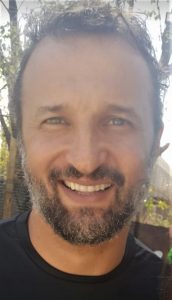
Luiz Ferraro (Brazil) received a PhD in Sustainable Development from the University of Brasília, after a BA in Agronomic Engineering and a Master’s Degree in Agricultural Sciences, both from the University of São Paulo. From 2000-2019 he taught as Professor of Environmental Sciences and Sustainable Development at the State University of Feira de Santana. From 2012-19, he also served as Superintendent of Environmental Research for the Secretary for the Environment of Bahia State.
Luiz currently coordinates work on 28 different social, economic and environmental programs for the Renova Foundation, created to restore the Doce River Basin after the 2015 Fundão Dam mining disaster. In this capacity, he oversees licensing and authorization processes, program monitoring and evaluation, team building efforts, and physical and financial planning for this $200 million per year program. Projects include traditional and indigenous peoples’ initiatives, environmental monitoring, community development, socio-economic, educational and cultural projects, rural property planning and recovery, and ecological restoration. His earlier positions on this project included Social Development and Dialogue Manager (2019-20), Executive Director of Governance (2020-21), and General Manager of Recovery Programs (2021-22).
As a teen, Luiz read about a massacre of landless families, which opened his eyes to his country´s reality. This raw description showed how closely related inequality, misery, power, land ownership, land grabbing and violence have been across Brazil’s history, but also at the local, regional and global level around the world. From the moment he learned about this, Luiz took responsibility and was determined to act so that marginalized people could empower themselves. He started his professional life working with the Landless movement, and his PhD research was on land grabbing, and the resistance by traditional communities. Luiz now brings his commitments, his personal and professional connections, as well as his expertise with political strategies, team building, projects and budget management to the IfE mission.
DEBORAH S. ROGERS, President, Initiative for Equality
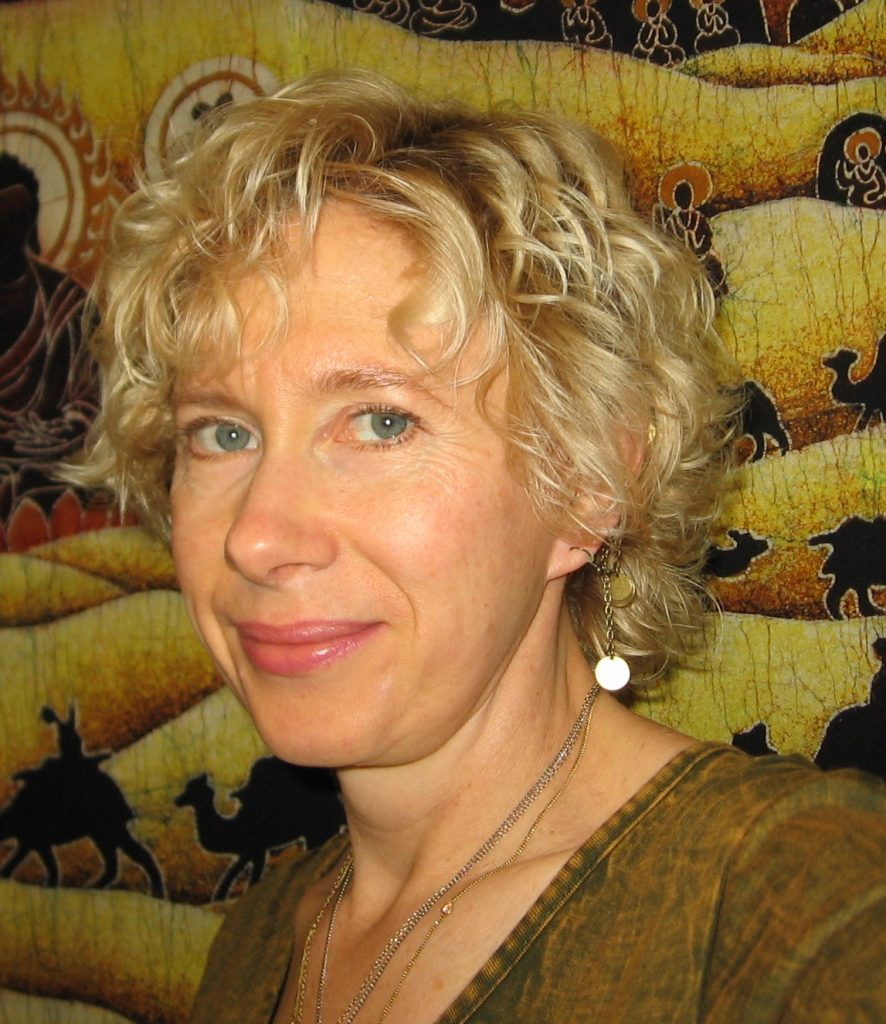
Deborah S. Rogers (United States) grew up in a multilingual academic family, living on four continents and establishing ties to a broad array of cultures. By the time she was 18, she had witnessed apartheid South Africa and the Bantustans, the Angolan war zone, anti-American demonstrations in Ghana, violence in inner-city St. Louis, and Lakota culture, reservation life and racism in South Dakota. Due to these early experiences, Deborah committed herself to working against inequalities and for environmental justice, rights and empowerment of indigenous and other marginalized peoples.
After obtaining a Master’s degree in ecology from the University of Wisconsin-Madison and working for The Nature Conservancy, Deborah founded and directed the Technical Information Project. This NGO on the Northern Plains of the US provided public interest research, grassroots political organizing and strategic legal interventions on behalf of groups attempting to protect their communities and environment from exploitative mining, waste disposal and water sales. Here she developed a range of skills including public and political organizing, legal interventions, media relations, non-profit management and fund-raising. Her organization successfully influenced the public discourse, prevented the destruction of unique natural areas, and protected local communities from destructive development and even organized crime.
Indigenous people’s issues have always been particularly important to Deborah. Over the years, she worked with the Black Hills Alliance in South Dakota, Wisconsin tribes, Women of All Red Nations, and the Standing Rock Sioux Tribe (writing their original water quality regulations). She reported for the Lakota Journal, directed the Walking Forward Lakota health disparities project, and taught at Oglala Lakota College on the Pine Ridge Reservation. With strong childhood connections in Africa, she also followed the situation of the Indigenous forest peoples (Batwa and Bambuti) across the continent for decades, and has been working to support these Indigenous groups and their defenders since 2015.
After shifting her primary focus from environmental to social issues, Deborah taught at the Oglala Lakota tribal college on the Pine Ridge Reservation, contrasting traditional Lakota cultural perspectives with Western scientific views in every lesson. She then managed a $5.5 million health disparities project serving three Lakota reservations in South Dakota. This project, the first such inter-ethnic collaboration in South Dakota history, required extensive cross-cultural dialogue, focus group input, language translation, and formal tribal review of project concepts. Meanwhile, in the aftermath of the September 11, 2001, attacks in the US, she founded and co-chaired a local intercultural group in western South Dakota which presented a series of popular forums on the shared history and values of Islamic, Jewish and Christian ethnic groups, successfully forestalling any threats of individual anti-Muslim violence in the region.
Deborah returned to graduate school in 2005, where her doctoral research at Stanford University focused on cultural change, and particularly the spread of socioeconomic inequality. Her research findings have been published in PNAS (Proceedings of the National Academy of Sciences), Proc-B (Proceedings of the Royal Society-B), and PLoS ONE (Public Library of Science), garnering review comments including “one of the most significant papers to be written in anthropology in the last 20 years” (Nina Jablonski). Her study on cultural change was chosen as one of the “100 top science stories of 2008” by Discover Magazine. While at Stanford, she was also active in the Stanford Labor Action Coalition and the Stanford Immigrant Rights Coalition.
Several decades of experience and research have led Deborah to identify socioeconomic inequality as one of the primary factors underlying our current unsustainable human trajectory. After obtaining her PhD, she worked for the UN in Bonn for one year, and then founded Initiative for Equality, a global network of advocates and community organizers working on issues related to social, economic and political inequality. Her unusually broad background provides a significant advantage in taking on these complex and interdisciplinary issues. Deborah is equally comfortable doing cutting-edge research, going on the lecture circuit, or engaging in grassroots organizing. She devotes her lifetime of knowledge, experience and commitment to promoting the shift towards socioeconomic equality and sustainability in human societies.
Deborah’s position as President of IfE is an honorary title in place of Executive Director or CEO. She is not a voting member of the IfE Board of Directors.
DANIEL MATHEWS, Secretary, Board of Directors

Daniel Mathews (Australia) is a mathematician and activist. He is a Senior Lecturer in the School of Mathematics at Monash University in Melbourne. He has degrees in law and science, diplomas in languages and music, a PhD in pure mathematics from Stanford University, has worked at a tech startup, and is admitted to practice law in Victoria.
In addition to his academic work as a pure mathematician, his passion for social justice and equality has led him to various forms of activism. He has been involved in antiwar activism in the US, legal work for police accountability in Melbourne, advocacy for civil liberties and against draconian encryption laws in Australia, fighting for better conditions for university staff, and served on the council of an electoral political party. His writing has appeared in venues from the Guardian to technical mathematics journals. He has been involved with IfE since its inception, serving on the IfE Board of Advisors from 2011 to 2018, and on the Board of Directors since that time.
WILLIAM ROBINSON,Treasurer, Board of Directors
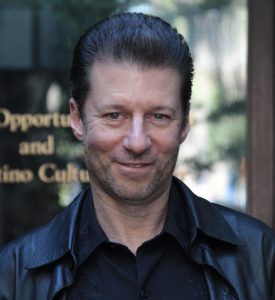
William I. Robinson (United States) studied as an undergraduate in the United States, East and West Africa, and then worked as a journalist in war-torn Central America in the 1980s and also served as a consultant to the Nicaraguan Foreign Ministry. He earned an MA in Latin American Studies and a Ph.D. in sociology from the University of New Mexico in 1994. He was affiliated faculty with the graduate program at the Central American University in Managua, Nicaragua, from 1994-2001 and has worked since 2001 as professor of sociology, global and international studies, and Latin American studies at the University of California at Santa Barbara.
William has been a lifelong activist in many peace, solidarity and social justice movements. Most recently, he has been active in the Palestine solidarity and immigrant justice struggles. He strives to place his scholarship in the service of grassroots struggles for social justice in the Americas and around the world. He is a frequent speaker in academic and activist venues on a wide range of current topics, among them global politics and economics, capitalist crises, and resistance movements.
ELISSA ROY, Board of Directors
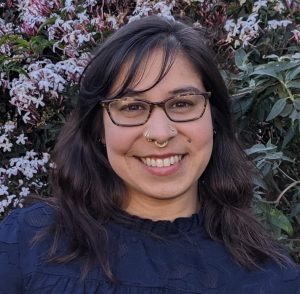
Elissa Roy (United States) is an experienced nonprofit leader working to build a just economy for everyone. With ten years of experience in nonprofit development and fundraising, she has worked in small organizations (<$10M annual budget) and large ones (>$2B annual budget), helping with everything from annual fund appeals to large multi-million dollar gifts. After receiving her BA in Psychology from University of California, Berkeley, she has worked with Partners in School Innovation (public education), the Women’s Foundation of California (gender equity), University of California Berkeley (higher education), and Community Action Marin (social services), among others. Elissa is currently working in projects aligned with the solidarity economy and Just Transition framework, supporting such efforts as cooperatives and community land trusts.
Elissa has served on the boards of local nonprofits and member chapter groups, including the Association of Fundraising Professionals (Golden Gate chapter), the Berkeley Student Cooperative (their External Affairs Committee) and also the related Berkeley Student Cooperative Alumni Association, and most recently with Initiative for Equality. She dedicates volunteer time to IfE because she believes “our struggles across the world are shared struggles, against pernicious challenges that crop up all over the globe. IfE’s work addresses the real drivers of these challenges with locally-led, time-tested solutions. To make the changes we need for not only humanity’s sake but the health of our Earth, there is truly no more important work right now than global solidarity.”
NIGEL NORIEGA, Board of Directors
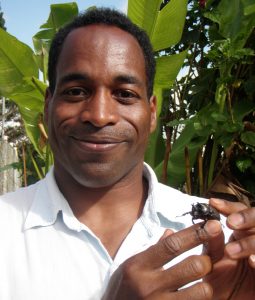
Nigel Noriega (United States) is a biologist and the founder and director of Sustainable Innovation Initiatives (SII) (https://www.sii-inc.org/), where he leads efforts to build ecologically regenerative and sustainable societies in tropical forest regions. He holds a PhD in Integrative Biology from the University of California, Berkeley, and a BS in Zoology from the University of Florida. Nigel has served on the Board of Directors for the Latin America and Caribbean section of the Society for Conservation Biology and coordinated the inaugural Latin America and Caribbean Congress for Conservation Biology. His biological research spans primate neurobiology and behavior (UC Davis, Oregon National Primate Research Center), environmental health (U.S. EPA’s National Health & Environmental Effects Research Laboratory) and endocrine physiology (UC Berkeley and Univ. of Florida)
Having grown up in Trinidad & Tobago, Nigel experienced firsthand how diverse communities navigate rapid social and environmental change within the constraints of small islands. His time conducting field research in southwest Uganda during the 1994 Rwandan Genocide and subsequent refugee crisis profoundly shaped his understanding of how to balance tradition and change for inclusive, sustainable development.
Nigel applies these experiences to community engagement, capacity building, and coalition building to help marginalized communities speak with their own voices. His work focuses on strengthening collaborative partnerships that improve scientific research, education, and public awareness—all essential for fostering behavior changes for sustainable and regenerative societies.
SHARAT LIN, Board of Directors
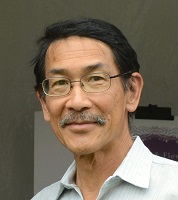
Sharat G. Lin (United States) is a research fellow at the San José Peace and Justice Center and its former president. He was a co-founder of South Asians for Collective Action (US), a member of Jan Vigyan Samiti (People’s Science Committee, India), and helped organize contract laborers for Vikalp (Alternative, India). He writes and lectures on global political economy, labor migration, social movements, and public health. He has been on the front lines of some epic moments in history, such the aftermath of the Naxalbari movement in India, the Cultural Revolution in China, the beginning of the Lebanese Civil War, Palestinian West Bank and Gaza during the early years of occupation, Portugal after the 1975 bloodless revolution, Nicaragua after the Sandinista revolution, Egypt during the Arab Spring uprising in 2011-2012, and Kurdish areas of Turkey during the battles against ISIS. His recent investigations include election observing in Mexico and El Salvador, the tar sands of Alberta, and the political disaffection in the U.S. Rustbelt and Appalachia.
YVES MINANI, Board of Directors
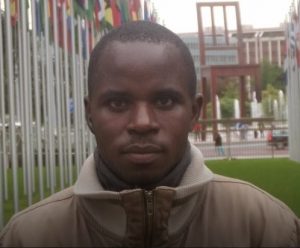
Yves Minani (Burundi) is Founder and Director of Union des Peuples Autochtones pour le Réveil au Développement (UPARED), a Batwa rights organization which monitors human rights and advocates for the development and well-being of the Batwa communities in Burundi since 2013. At the regional level, he is the coordinator of IfE’s Réseau Initiative for Equality (RIFE) Coordination Committee, our regional network in Burundi, the Democratic Republic of Congo and Rwanda. He played a lead role in Burundi in the 2021-2023 RIFE project entitled “Building a Batwa women’s movement to eliminate sexual and gender-based violence”, funded by the donor consortium AmplifyChange.
At the international level, Yves is former Africa focal point for the Global Indigenous Youth Caucus (April 2019 – April 2024). In this role, he organized meetings of young Indigenous African leaders and held interactive debates on the global Indigenous Youth movement. He currently works with the World Food Forum and co-leads the Africa Delegation of Indigenous Youth for the II Session of the biennial UN Global Indigenous Youth Forum, creating and launching their Campaign, “My Food Vision Is…”. In addition, he serves as the focal point for Indigenous Peoples in the East and South Africa region within the World Bank system. In this role, he works with World Bank units in countries across the region, monitoring the World Bank’s regional activities on behalf of Indigenous Peoples and raising Indigenous issues within the broader World Bank committee at the global level.
Recently, he has been appointed to work with the UN’s Food and Agricultural Organization (FAO) as Youth and Africa Region Support Consultant. There, in collaboration with the FAO Indigenous Peoples Unit (PSUI) members and FAO technical units, he will support the coordination and monitoring of PSUI’s work with Indigenous Peoples and organizations in Africa; facilitate the inclusion of Indigenous Peoples in this Sociocultural Region in PSUI’s work, publications, and activities; organize and coordinate the implementation of a training on FPIC (Free, Prior and Informed Consent) in Regional Offices within the Sociocultural Region; and support PSUI’s coordination with Indigenous Youth organizations, especially within the sociocultural region. Yves advises IfE on our work with the Batwa people and represents our regional network called RIFE.
#####